0

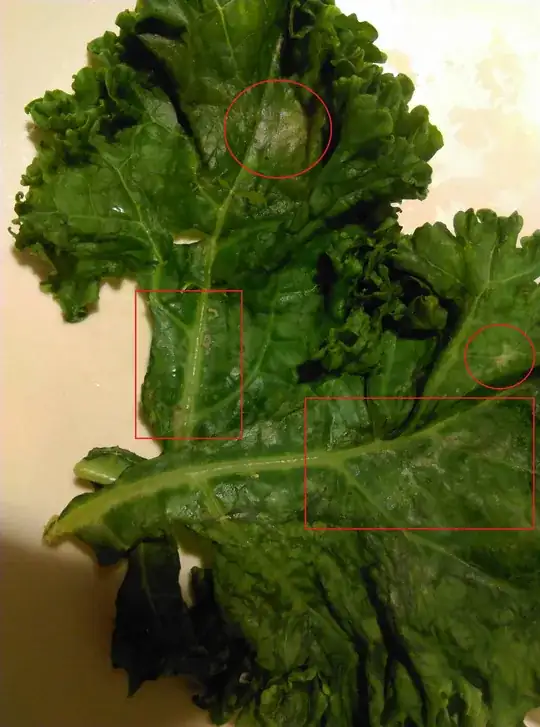
I can't rinse, or wash, off these yellowish bumps! They don't feel like dirt or sand! Are they larvae? I bought this Kale grown in California.

For my reference, beneath are my pics # 22, 62, 65, 68, 76, 89, 95.

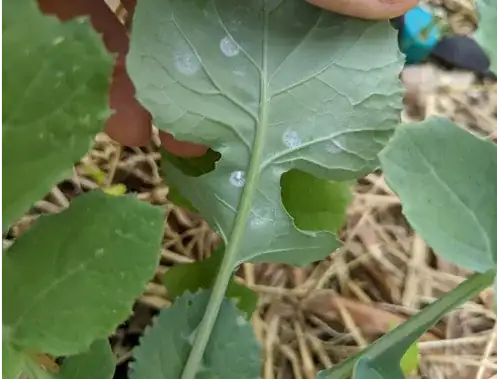
I afraid, because these bumps overhead look like picture beneath like pests!

Evidence of whiteflies on the underside of leaves, shown here on kale. Look for white circles with eggs arranged in a semi-circle. Adults may be present as well.

rumtscho
  • 134,346
  • 44
  • 300
  • 545

3 Answers3

4

It doesn't matter what they are. Plant diseases can't infect humans; that's the stuff of science fiction. Also, eating insects is not dangerous. So you can eat the food without any actual risk.

It's good cooking practice to remove any unusual spots from the leaves, including bumps, discolorations, suspected larvae, and anything else. The reasons behind it have to do not with danger per se, but with quality. It can taste bad, many people are disgusted by it, and it's a general sign of sloppiness if you don't take care to clean the leaves from anything unusual. So cut or tear it out and only prepare the healthy green parts.
rumtscho
  • 134,346
  • 44
  • 300
  • 545
  • Just a quick note about bugs in food, this is not wrong. However; it is not ok if you are kosher or halal. Insects and insect products are "not kosher" and haram. Just a note for those who care about such things. – Escoce Jun 21 '23 at 00:35
  • "Plant dieseases can't infect humans" - could you pls. add a reference? – G. B. Jun 21 '23 at 11:39
  • 1
    @G.B. I tried to think of places where I'd look for such a reference, but couldn't come up with any. It's a bit like asking a reference on the statement that dogs don't rob banks - I don't think there's any research done on things that don't happen. – rumtscho Jun 21 '23 at 11:47
  • 1
    @G.B. maybe you can do it the other way round, that's the best approximation I can think of. There's the [FDA bad bug book](https://www.fda.gov/media/83271/download), a consumer-oriented resource which lists all pathogens the FDA considers relevant to foodborne illness. You can check these pathogens and see if any of them are known to cause a plant disease. – rumtscho Jun 21 '23 at 11:54
0

While a couple of those spots look like insect damage (by an insect that's no longer present), the rest simply look like age-related decay.

That is: that kale leaf looks like it's starting to decay due to being stored too long. I personally wouldn't use it at all, and if the rest of the kale looks like that, I'd toss it. Not because of any health threats, but simply because it's not going to taste very good.

FuzzyChef
  • 58,085
  • 18
  • 142
  • 218
  • *While a couple of those spots look like insect damage (by an insect that's no longer present* Which spots? Can you point them out please? –  Jun 22 '23 at 00:42
0

The kale looks like it was grown in calcium deficient soil; harmless to you.

The white flies can be removed by washing your produce, rubbing lightly between your finger and thumb under running water.

Escoce
  • 6,324
  • 1
  • 16
  • 21
  • Where are the "white flies"? I don't see them? Or are you referring to the larvas? –  Jun 22 '23 at 00:41
  • @user1187177 the white spots under the leaves are egg sacs, very similar to spider egg sacs. – Escoce Jun 23 '23 at 19:06
  • Thanks. Please don't hesitate to elaborate on these "egg sacs" right in your answer, rather than comment. –  Jun 24 '23 at 23:09